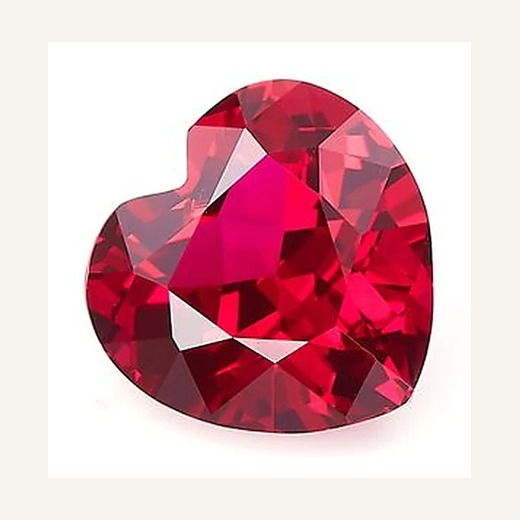
A birthstone ring is a nice idea until the stone chips in the first month. Hardness gets the attention, but toughness — resistance to impact and cleavage — matters just as much.
The safe group (Mohs 7+)
- Diamond (10) — April. The obvious choice for daily wear.
- Corundum: sapphire (9) — September. Ruby (July) is the same mineral. Tough and stable.
- Moissanite (9.25) — not a traditional birthstone, but the hardest alternative after diamond.
- Garnet (7–7.5) — January. Fine in a bezel; check for fracture-filled stones.
- Amethyst / citrine (7) — February / November. Quartz is fine for rings if set protectively.
The careful group (6–7)
- Emerald (7.5–8) — May. Hard but heavily included; almost always oiled. A bezel is essential.
- Tourmaline (7–7.5) — October. Good hardness, but cleavage makes it vulnerable to a sharp knock.
- Peridot (6.5–7) — August. Softer and sensitive to acid; not ideal for a daily ring.
- Tanzanite (6–7) — December. Beautiful, brittle, and prone to cleavage. Occasional wear only.
The delicate group (below 6)
- Opal (5.5–6.5) — October. Water content and porosity make it a bad daily-wear ring stone.
- Pearl (2.5–4.5) — June. Soft, porous, damaged by perfume. Necklace or earrings, not a ring.
- Turquoise (5–6) — December. Porous and colour-treated; avoid water and chemicals.
- Moonstone (6) — June. Cleavage makes it chip in a ring.
Setting advice
For anything under 8 on the Mohs scale, use a bezel or a low halo and avoid thin prongs. A bezel distributes impact around the girdle; prongs concentrate it at four points. For emerald and opal, a bezel with a closed back protects the stone from both impact and drying.
If your birthstone is delicate
Two options: wear it as a pendant (far less exposed), or choose a harder stone of the same colour family — sapphire for blue, garnet for red, spinel for pink. We will tell you honestly which is which. Colour stones →

The people who cut the stones and set the rings. We publish what we can verify on our own bench, and link to the certificate or the guide when a number needs a source.
